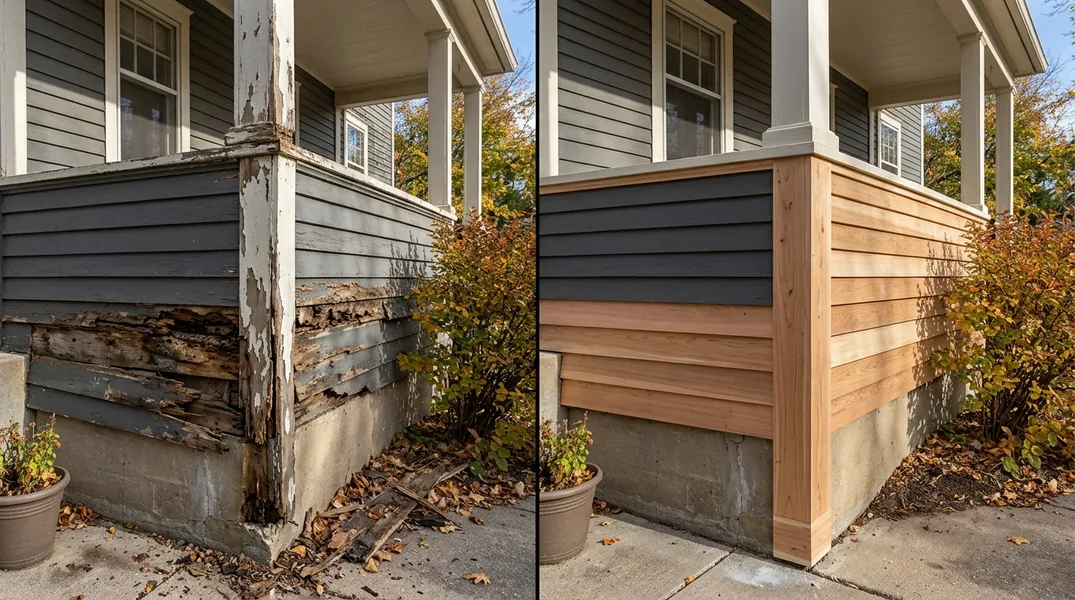
Understanding Wood Rot vs. Insect Damage
When you discover soft, discolored wood on your home, the first question is always: can this be saved, or does it need to come out? The answer depends on what caused the damage in the first place. Wood rot and insect damage are two distinct problems, though they sometimes occur together, and each requires a different repair strategy.
Wood rot happens when moisture penetrates wood fibers and fungal spores begin to break down the cellular structure. Dry rot, despite its name, is actually a fungal decay that thrives in damp conditions and can spread rapidly through a structure if left untreated. Insect damage, on the other hand, comes from termites, carpenter ants, powder post beetles, and other wood-boring pests that tunnel through wood as they feed. While wood rot weakens the wood from within through decay, insect damage creates galleries and voids that compromise structural integrity. Both can be serious, but they demand different solutions. Understanding which problem you're facing is the first step toward deciding whether repair or replacement makes sense for your Madison home.
Can You Repair Rotted Wood Without Replacing It?
The good news: in many cases, yes. If wood rot is caught early and is confined to a small, non-structural area, Wood Rot & Dry Rot Repair can often be completed without full replacement. Early-stage rot may only affect the outer layers of wood, and a skilled carpenter can remove the affected portion, treat the area to prevent future moisture intrusion, and apply specialized epoxy fillers or patches to restore functionality and appearance.
However, the word 'early' is critical. If rot has penetrated deep into structural members like floor joists, beams, or load-bearing walls, repair becomes risky or impossible. Structural wood must carry weight safely, and compromised wood cannot be trusted to do that job. This is where Floor Joist & Subfloor Repair or Beam Replacement & Load-Bearing Wall Removal may be necessary. The extent of decay, the wood's location in your home, and whether the damage affects structural performance all factor into the decision. A professional inspection is the only reliable way to know whether repair is feasible or whether replacement is the safer, more durable choice.
Insect Damaged Wood Repair: Repair or Replace?
Insect damage presents its own set of challenges. Termites and carpenter ants leave behind galleries and tunnels that honeycomb the wood, and the extent of this damage is often hidden until a carpenter opens up the affected area. Unlike surface rot, which you can sometimes assess visually, insect damage requires careful probing and sometimes moisture meter readings to determine how deep the destruction goes. If the damage is confined to outer portions of non-structural trim or siding, Termite Damage Repair can involve localized removal and patching. But if structural members are involved, replacement is almost always the safer option.
One additional concern with insect damage is the pest itself. Before any repair work begins, the infestation must be eliminated. A carpenter can fix the wood, but if termites or ants are still active, they will simply damage the new wood too. This is why professional Termite Damage Repair often involves coordination with a pest control specialist. Homeowners in Madison who discover insect damage should never assume a quick patch will solve the problem. Proper repair requires addressing both the damage and the source.
When Replacement Is the Only Safe Option
Certain situations leave no room for debate: replacement is necessary. If wood rot or insect damage has affected more than 30 percent of a structural member's cross-section, that member has lost too much load-bearing capacity to be trusted. If decay or galleries run the length of a joist, beam, or stud, replacement is the only responsible choice. Similarly, if rot or insect damage is found in critical areas like the rim board, band board, or any part of the foundation system, replacement protects your home's structural integrity and your family's safety.
Siding is another common area where replacement makes sense. If you have rotted wood siding that extends across multiple boards or shows signs of moisture penetration into the framing behind it, Madison homeowners often find that replacing the affected section is more cost-effective and longer-lasting than attempting to patch individual boards. When you replace rotted wood siding, you also have the opportunity to address the underlying moisture problem, install better flashing, and choose more durable materials. This prevents the same problem from recurring in five years.
Wood Rot & Dry Rot Repair Cost in Madison: What to Budget
Cost is understandably a major factor in the repair-or-replace decision. The pricing for wood rot repair varies widely depending on the extent of damage, the wood's location, and whether structural members are involved. A small area of surface rot on exterior trim might cost $200 to $500 to repair. Larger repairs affecting multiple boards or deeper structural concerns can easily run $1,000 to $5,000 or more. Full replacement of rotted wood siding on a section of your home might cost $2,000 to $8,000 depending on the area's size and the material you choose.
The key to understanding pricing is recognizing that repair is not always cheaper than replacement. A hastily patched board that fails again within a few years costs more in the long run than replacing it properly the first time. Additionally, if repair requires extensive investigation, framing removal to assess hidden damage, or multiple visits, costs can climb quickly. This is why getting a professional assessment and detailed estimate is so important. Madison Carpentry can provide a free estimate that breaks down the scope of work, materials, and labor so you can make an informed decision. Call (608) 471-7359 to schedule your inspection.
Wood Rot & Dry Rot Repair Near Me: When to Call a Professional
If you notice soft spots on wood trim, visible discoloration, a musty smell in your basement or crawlspace, or evidence of termite activity, do not wait. These are signs that professional assessment is needed. Homeowners often try to manage small rot problems on their own, but wood decay and insect infestations tend to spread faster than most people expect. What looks like a minor issue today can become a major structural problem within months if moisture and pests continue to have access to your wood.
A professional carpenter can determine whether repair is viable, whether replacement is necessary, and what underlying conditions need to be addressed to prevent recurrence. Madison Carpentry serves the Madison area with thorough inspections, honest assessments, and quality repairs. We do not recommend replacement when repair is safe and sensible, and we do not recommend risky repairs when replacement is the right choice. Our goal is to protect your home and your investment. If you are facing rotted or insect-damaged wood, contact us today at (608) 471-7359 or visit our website to request a free estimate. We will help you understand your options and find the best solution for your situation.
Looking for a professional carpentry contractor in Madison? Madison Carpentry responds fast for all your carpentry needs.
Get a Free QuoteOur services: Wood Rot & Dry Rot Repair · Termite Damage Repair · Floor Joist & Subfloor Repair