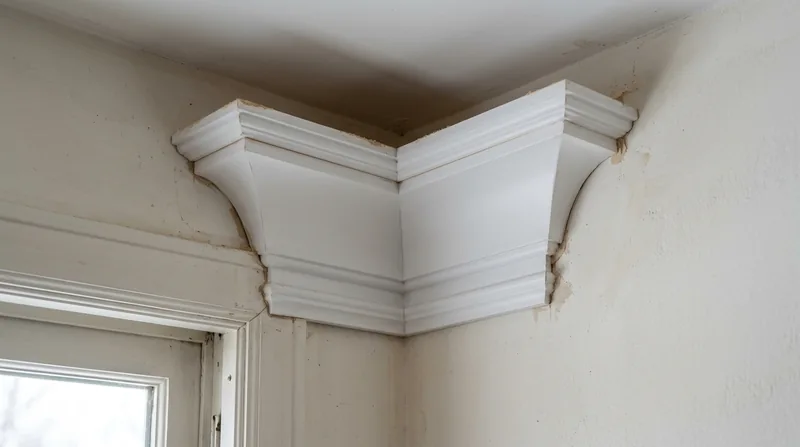




Crown Molding & Baseboard Installation in Madison demands precision and an eye for period detail. Madison's residential neighborhoods, from the 1880s Queen Anne mansions on Mansion Hill to the Craftsman bungalows of Vilas and the post-war Cape Cods scattered through Westmorland and Hill Farms, each carry their own trim vocabulary. A coped joint in a 1920s foursquare tells a different story than crisp modern baseboard in a newer Fitchburg subdivision. Whether you're restoring original profiles or installing fresh trim that reads clean and tight, the work hinges on accurate scripting, tight caulk lines, and carpenters who understand how wood moves with Madison's freeze-thaw cycles and lake-country humidity. We handle crown molding, baseboards, chair rail and window casing with the craftsmanship these homes deserve, and we can help you explore finish carpentry options that complement your home's character or your modern design intent.
Why Crown Molding and Baseboards Matter in Madison's Older Neighborhoods
Madison's neighborhoods tell their stories in trim. The deep eaves and substantial baseboards of a 1910 Craftsman bungalow in Regent or Dudgeon-Monroe reflect a building philosophy that prized detail and durability. Baseboards protect drywall from foot traffic and furniture, but they also anchor a room's proportions. Crown molding bridges the visual gap between wall and ceiling, and when it's installed with coped joints rather than mitered corners, it reads as intentional craftsmanship. Moisture from Madison's spring snowmelt and autumn humidity can damage original trim, and replacement or repair often becomes necessary. Getting the profile, spacing and finish right matters, especially in neighborhoods where architectural consistency carries real value.
- Original baseboards in Mansion Hill and Tenney-Lapham homes often sit right at the damp line where sill plates meet foundation, requiring careful inspection before deciding whether to preserve, repair or replace.
- Coped joints allow crown molding to follow ceiling irregularities without visible gaps, a technique that separates field carpentry from finish work.
- Modern baseboards can be installed with similar attention to detail, creating clean lines that work in updated interiors or period-appropriate homes alike.
- Trim installation affects room acoustics, dust accumulation and ease of cleaning, so material choice and profile matter as much as installation precision.
These details compound over time, shaping how a room feels and how well it weathers Madison's demanding climate.
Key info: Madison's City of Madison Planning Division publishes guidance on historic district standards for properties in Mansion Hill, Tenney-Lapham and other protected neighborhoods. If your home sits in one of these districts, trim restoration or replacement may require review before work begins. Check with your local alderperson's office or the Planning Division at (608) 266-4635 for guidance specific to your address and scope.
How We Install Crown Molding and Baseboards: Process and Precision in Madison Homes
The work starts with measurement and scripting. We visit your home, assess existing conditions, identify the profile and finish you want, and account for walls that are rarely perfectly plumb or level. In older Madison homes, settling and seasonal wood movement mean that rigid measurements alone won't produce tight joints. We cut coped joints where trim meets existing trim, script baseboards to follow floor contours, and use caulk strategically to bridge small gaps without relying on it to hide poor fit. Finish and paint prep happen before installation, so the trim is protected and ready to last.
- We measure each room and each wall segment independently, because no two walls in a 90-year-old Madison home will be exactly square.
- Crown molding is cut with coped joints at inside corners, eliminating the gaps that appear when mitered joints shift with seasonal humidity.
- Baseboards are scripted to follow the floor line, so uneven flooring doesn't create visible daylight between trim and floor.
- All trim is nailed securely into studs or blocking, never floating or relying on adhesive alone to hold against wood movement.
- Caulk is applied at the wall-to-trim interface and any small gaps, then sanded smooth and painted to match or contrast as you prefer.
This approach takes more time than fast-track installation, but it produces the tight, durable result that Madison's older homes demand and deserve.
Example: A 1925 American foursquare in Madison's Schenk-Atwood neighborhood had original 4-inch baseboards with a subtle ogee profile. Moisture damage near the foundation had softened about 40 percent of the board. We removed and replaced only the damaged sections, matched the profile using period-appropriate stock, and installed with the same fastening pattern as the original. The homeowner could preserve the rest of the original trim, and the new sections blend seamlessly once painted.
For complementary services like custom built-ins or interior door installation, we apply the same scripting and coping discipline.
Installation Methods and Materials: Choosing the Right Approach
| Approach | Description | Best for |
|---|---|---|
| Solid wood trim with coped joints | Hardwood or softwood (poplar, pine, oak) cut and fitted on-site with coped inside corners and scripted baseboards. | Period-appropriate restoration, high-end finishes, homes where wood character and detail matter. |
| Primed MDF or composite trim | Engineered wood product, factory-primed, installed with coped joints and caulk at the wall interface. | Budget-conscious projects, homes where paint finish is the primary aesthetic, lower-moisture rooms. |
| Hybrid: solid wood crown with composite baseboard | Combines detailed solid-wood crown molding (visible overhead) with primed composite baseboard (lower wall, higher wear). | Balancing visual impact, durability and cost in mid-range residential projects. |
| Stain-grade hardwood with varnish finish | Oak, cherry or walnut trim finished on-site with stain and polyurethane, showcasing wood grain and color. | High-end interiors, open-concept homes where trim is a design focal point, owner preference for natural wood. |
Crown Molding & Baseboard Installation Cost in Madison: What to Expect
Crown molding and baseboard installation in Madison starts at $450 to $600 per room for a straightforward 12-by-14-foot bedroom with paint-grade trim and standard profiles. Larger rooms, more complex layouts, multiple inside and outside corners, or stain-grade hardwood will cost more. The factors that move pricing are room size, linear footage, profile complexity, material choice (solid wood versus composite), and whether existing trim needs removal or repair. A 1920s Madison home with original baseboards that need partial replacement, combined with new crown molding in three rooms, typically runs $1,800 to $3,200 depending on profile and material. Getting two or three estimates from local carpenters ensures you understand what's included and how pricing reflects your specific scope.
- Room size and linear footage of trim are the primary cost drivers, because material and labor scale directly with wall length.
- Coped joints take more time than mitered corners, so requesting coped installation will increase the estimate proportionally.
- Stain-grade wood and custom profiles cost more than paint-grade stock, and finishing on-site adds time and material expense.
- Removing old trim, patching walls, and addressing moisture damage or uneven surfaces add to the scope and final cost.
- Paint or stain finishing is typically included in the labor estimate, though some carpenters quote finishing separately.
For a detailed breakdown of pricing across different room sizes and material options, visit our full pricing overview. A free estimate from our team will give you a concrete number for your home and scope.
What to Look for When Hiring a Carpentry Contractor Near Madison
Choosing the right carpenter for trim work means looking beyond price. You want someone who understands your neighborhood's architectural standards, who has handled similar homes and scopes, and who can explain how they'll address your walls' specific conditions. A carpenter working in Madison's Mansion Hill or Tenney-Lapham historic districts should be familiar with local design guidelines. For newer homes in Fitchburg or Sun Prairie, the priorities shift to clean modern lines and tight caulk finishes. Fully insured status is essential, because accidents and damage do happen, and you need to know you're protected.
- Ask for references from homeowners in your neighborhood, ideally people who've had trim work done in similar-era homes.
- Request a written estimate that breaks down material, labor, finishing and any removal or wall prep, so you can compare apples to apples across quotes.
- Confirm that the carpenter carries liability insurance and can provide a certificate of insurance before work begins.
- Discuss the permit situation with your local building department if your project involves structural changes or if your home is in a protected historic district.
- Ask how the carpenter handles unexpected conditions, like discovering moisture damage or structural irregularities once work is underway.
- Get a timeline in writing, including start date, expected completion and how weather or material delays will be communicated.
For a free, no-obligation estimate on your crown molding and baseboard project, contact us at (608) 471-7359. We'll visit your home, assess the scope, answer your questions and provide a written quote within 24 hours.
Seasonal Timing for Crown Molding and Baseboard Work in Madison
Crown molding and baseboard installation can happen year-round in Madison, but spring through fall offers the best working conditions. Winter cold and humidity swings can affect paint and stain drying times, and accessing upper crown molding becomes awkward if heating systems are running. Spring and early summer are ideal because heating is off, humidity is moderate, and paint or stain dries predictably. Fall works well too, though the transition into winter can slow drying. The real constraint in Madison is not seasonal but moisture related: if your home has active water intrusion or if baseboards are sitting in damp conditions, addressing the moisture source before installing new trim ensures the work will last. A carpenter can assess whether moisture is a concern during the initial estimate.
If you're planning restoration work on older trim or dealing with wood rot damage, wood rot repair should happen before new trim goes in. Schedule your free estimate by calling (608) 471-7359, and we'll help you sequence the work for the best outcome.
Crown Molding & Baseboard Installation in Madison: Pricing Guide
| Service | Price | Details |
|---|---|---|
| Single room, paint-grade trim | Starting at $450 | Baseboard and crown molding in a 12-by-14-foot room with standard profiles and paint finish. |
| Multiple rooms or larger spaces | Starting at $800 | Open-concept homes or three-to-four-room projects with coped joints and professional paint finish included. |
| Stain-grade hardwood or custom profiles | Starting at $1,200 | Oak, cherry or walnut trim with on-site finishing, coped joints, and period-appropriate profiles for older Madison homes. |
| Full-home trim package with removal and repair | On estimate | Projects involving existing trim removal, wall patching, moisture damage repair or extensive scripting require on-site assessment. |
| Travel | Included | No separate mileage or travel charge for Madison and surrounding service areas including Middleton, Fitchburg and Verona. |
| Free estimate | No charge | Written estimate provided within 24 hours at (608) 471-7359, no obligation to book or proceed with work. |
Indicative pricing, the exact cost depends on square footage, finish, and site access. Free personalized estimate within 24h at (608) 471-7359.


