Carpenter in Madison, WI: Wood Rot, Structure & Finish Work
Madison Carpentry serves homeowners across Madison and the surrounding communities of Middleton, Fitchburg, Sun Prairie and Verona with honest, skilled carpentry work. Whether you are searching for a carpenter near me in Madison or need structural repair in one of the older neighborhoods like Mansion Hill, Tenney-Lapham or Dudgeon-Monroe, we handle the full range of residential wood work: wood rot and dry rot repair, structural framing and joist work, and the finish carpentry that makes a house feel complete. We work on the Queen Annes and foursquares built in the 1880s through 1920s, the Craftsman bungalows and Prairie School cottages scattered through our older neighborhoods, the post-war Cape Cods and ranches, and the newer two-story homes spreading through the suburbs. The same carpenters who assess the damage also do the repair, and we know this building stock and its particular vulnerabilities.
Madison's climate and setting between two lakes create specific challenges for wood. Freeze-thaw cycles, heavy snow load on porch roofs, ice dams backing meltwater into fascia and wall cavities, and the humid lake-country summers all conspire to move water into sill plates, rim joists, deck ledgers and window frames. A house that has settled over a century is normal here; what matters is whether the wood is still sound and whether the water source can be closed. When you notice soft spots in siding, a bouncy floor, or damage found after a pest inspection, call us for a free wood rot inspection.
Why Wood Fails in Madison, and How We Read It
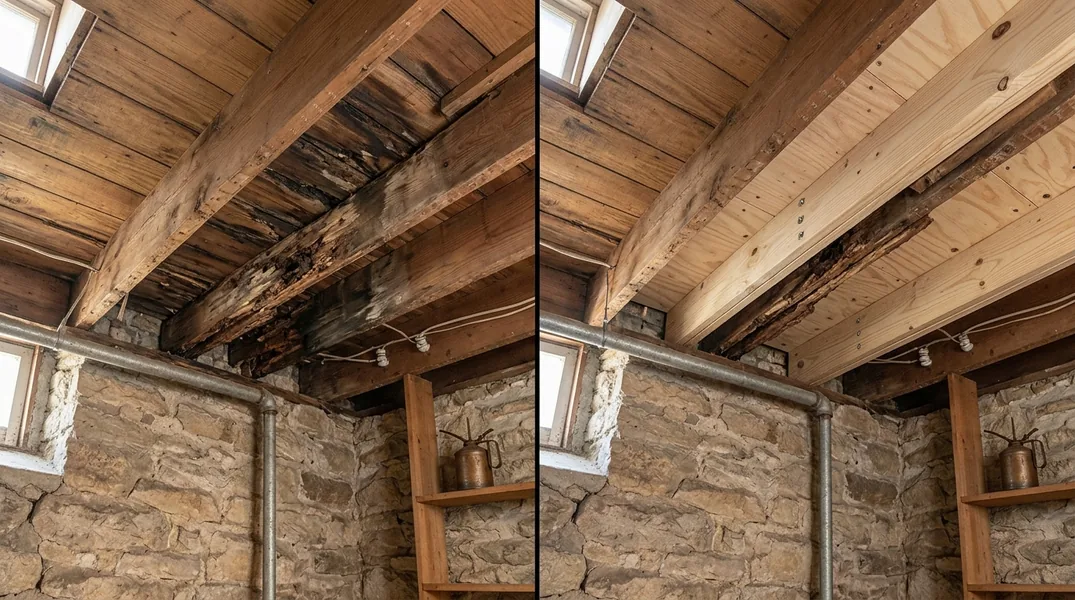
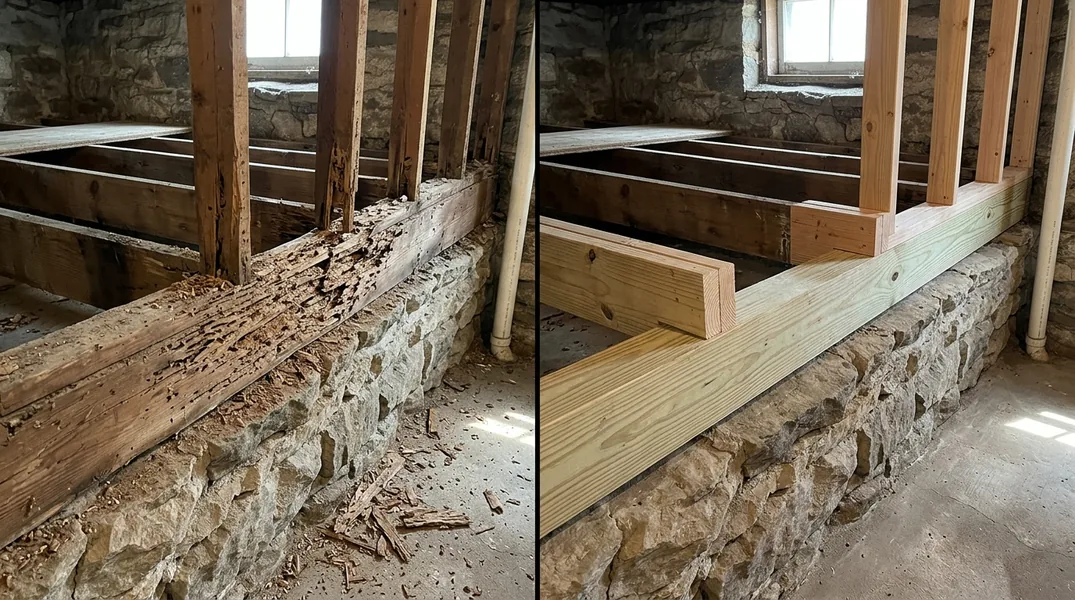
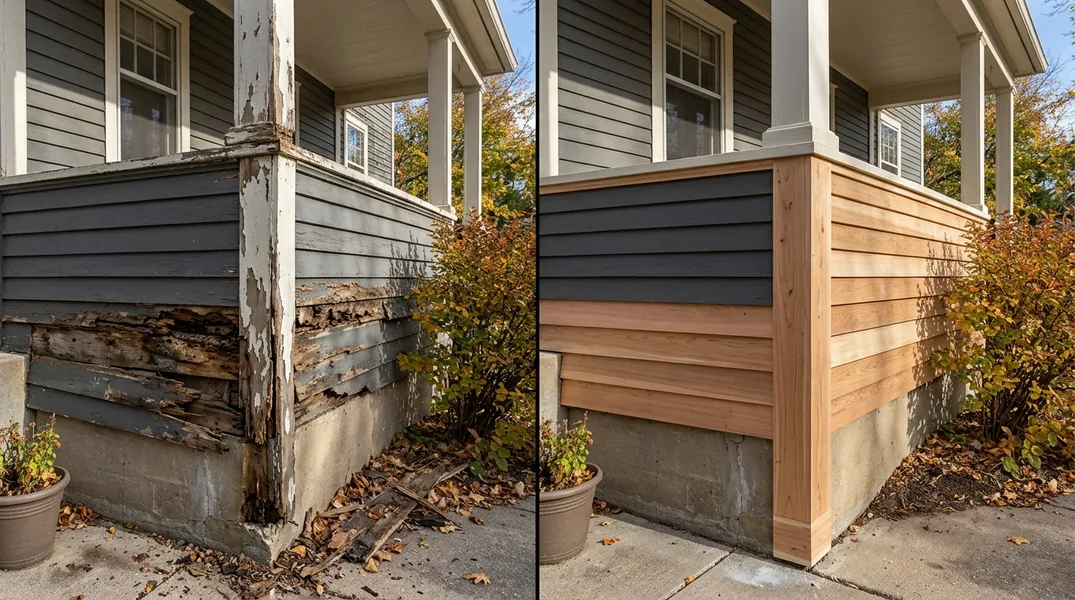
Wood fails here in three distinct ways, and each one tells a different story. Dry rot is a fungus that needs sustained moisture in the wood fiber itself, not standing water. The long grey overcast stretches, spring snowmelt soaking porch posts and deck ledgers, and the damp line at the sill plate where fieldstone or block basements weep in spring all supply exactly the conditions dry rot needs. It advances slowly, turning sound wood to powder while the paint film stays intact, which is why a member can look fine on the surface and be hollow inside. Wet rot occurs at thresholds, window sills, and anywhere water pools and sits. Termites and carpenter beetles tunnel through a member from inside, leaving the outer shell sound enough to hide the damage. We assess each type by probing to find where sound wood begins, examining the framing behind the visible surface, and tracing the water path that fed the decay. The honest assessment is straightforward: cosmetic surface softness on a sound member can be cut out and the section rebuilt with new wood; a joist or beam that has lost its structural section gets replaced, often by sistering a new member alongside the old one; and if the water source is not closed, any repair will fail again. Filler over rot is not a repair, and we will not sell you one.
On insects, we stay in our lane. We repair and replace the wood that insects have damaged, working from your own pest inspection report. If your inspection report names termite or beetle damage, we can assess the structural impact and price the wood repair. That is where our work ends and the pest control specialist's begins. Call (608) 471-7359 to discuss what you have found, or learn more about termite damage repair.
The key to lasting repair is understanding why the wood failed and closing that door. A sill plate that has rotted because the basement weeps needs the water managed; a deck ledger that has failed needs the flashing detail fixed; a porch post standing in standing water needs drainage or relocation. We price both the wood repair and the conditions that make it necessary, because the first without the second is money wasted. When we quote a job, we explain what we are repairing, why it failed, and what has to change so it does not fail again.
Structural Carpentry in Madison: Joists, Beams and Settling
Floor joist and subfloor repair is common in this building stock, and so is the anxiety that accompanies it. A floor that has gone soft or noticeably out of level in a hundred-year-old house often reflects the slow, steady settling that is normal here, not active failure. What matters is whether the member is still moving and whether the wood is sound where it bears load. A joist that has lost some section can often be repaired by sistering a new joist alongside it, fastened through the existing member to share the load. A subfloor section that has rotted can be cut out and replaced. A sill plate or rim joist that has failed at the foundation line requires careful assessment of what is sound and what must be replaced. We examine these conditions methodically, without drama, and quote the repair that makes sense.
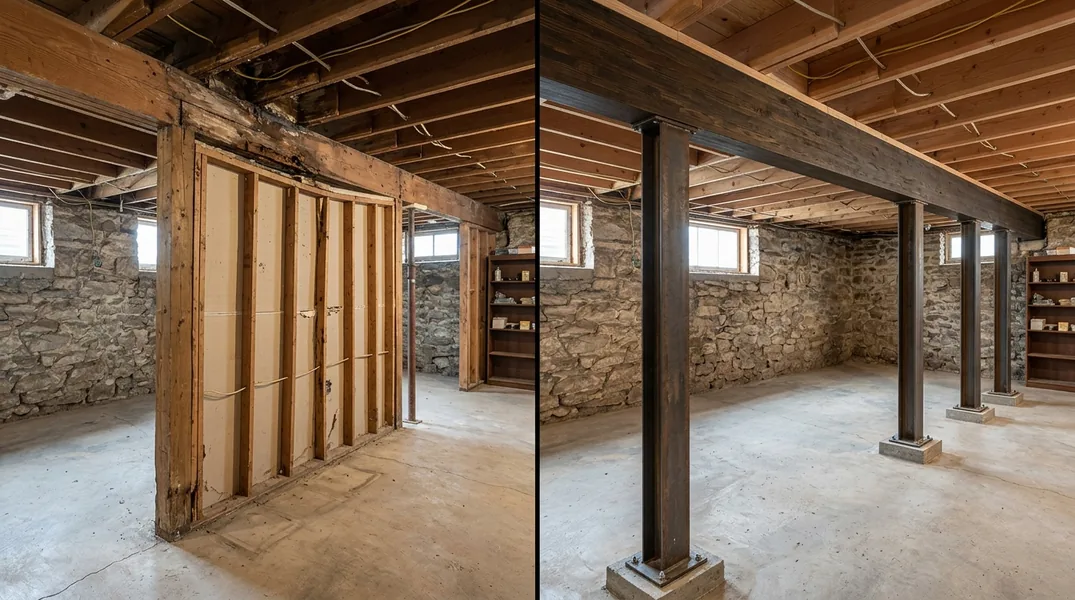
Larger structural work, such as beam replacement or load-bearing wall removal, commonly requires drawings from a licensed structural engineer and a permit from the local building department. Beam sizing and load calculations are engineering work, not carpentry. We build to the engineer's drawings and the permit specifications, and we know the framing practices and material choices that suit this climate and this building stock. If your project involves removing or altering a load-bearing wall, replacing a beam, or other structural changes, the structural engineer and your local building department will set the requirements. We execute the work to those standards.
Finish Carpentry and Built-Ins in Madison Homes
Finish carpentry in Madison's older neighborhoods is as much about preservation as it is about new work. Many of the houses we work on have original casing, baseboard, crown molding and wainscoting worth matching or restoring. Bay windows with out-of-square openings, compact floor plans with narrow hallways and built-in shelving, and door frames that have settled over time all require the kind of carpentry that reads the existing conditions and scribes new work to fit. A coped joint at a corner molding, for example, fits tighter and lasts longer than a caulked miter, and it is the right detail when the walls are not plumb. Crown molding and baseboard installation, custom built-ins and shelving, and interior door installation and repair are the work that makes a house feel like home.
We also handle cabinet and vanity installation, stair and railing repair, exterior and entry door installation, and deck and porch repair. The craft is in the details: consistent reveals, profiles matched to the period of the house, and the patience to fit new work into spaces that are neither flat nor square. A Craftsman bungalow with deep eaves and original wood clapboard deserves trim work that honors its character. A 1950s ranch with simple lines and clean openings needs finish carpentry that respects its era. We do that work with care.
Permits, Repair-or-Replace & What We Do Not Do
Permits are required for many types of carpentry work, but requirements vary by jurisdiction and project scope. In most cases, structural work such as removing or altering a load-bearing wall, replacing beams or joists, and modifying stairs or exterior decks will require a permit and often an engineer's drawings. A permit also protects you, because it brings the work under inspection and ensures it meets current code. We recommend always verifying permit requirements with your local building department before starting your project, and we are happy to discuss what your specific work will likely need.
The decision to repair or replace a damaged wood member comes down to three factors: how much sound section remains, whether the water source that caused the damage can be closed, and how the two costs compare. We quote both options when both are real, and we explain the trade-offs plainly. A member that is mostly sound gets repaired. A member that has lost its structural section gets replaced. And if the water source is not addressed, neither repair nor replacement will last. We are fully insured and can help you document the damage for an insurance claim, though coverage decisions rest with your insurer. Requirements vary, and permit thresholds differ from one jurisdiction to another. Always verify with the Madison building department before starting your project.