Why Madison's Historic Homes Demand Special Attention
If you own a Queen Anne Victorian or Craftsman bungalow in Madison, you're steward of something genuinely special. These homes, which define the character of neighborhoods from the Isthmus to Vilas, were built between the 1890s and 1920s with craftsmanship and materials that are increasingly rare today. But that architectural charm comes with real maintenance responsibilities that modern houses simply don't face.
The wood that gives these homes their beauty, warmth, and structural integrity is also their most vulnerable asset. Exposure to Madison's four distinct seasons, combined with aging building envelopes and the natural settling of century-old frames, creates conditions where wood deterioration accelerates. Understanding how to protect and maintain these elements isn't just about preservation; it's about avoiding catastrophic repairs that can cost tens of thousands of dollars.
Understanding Wood Rot, Dry Rot, and Why They Matter
Wood rot and dry rot are not the same thing, though homeowners often use the terms interchangeably. Wet rot occurs when wood stays damp for extended periods, allowing fungal growth that softens the wood fibers and compromises structural integrity. Dry rot, despite its name, also requires moisture to develop; it simply spreads more aggressively through wood and can travel through masonry, making it particularly dangerous in older homes where moisture control is poor. Both conditions thrive in the damp basements, crawl spaces, and poorly ventilated attics common in historic Madison homes.
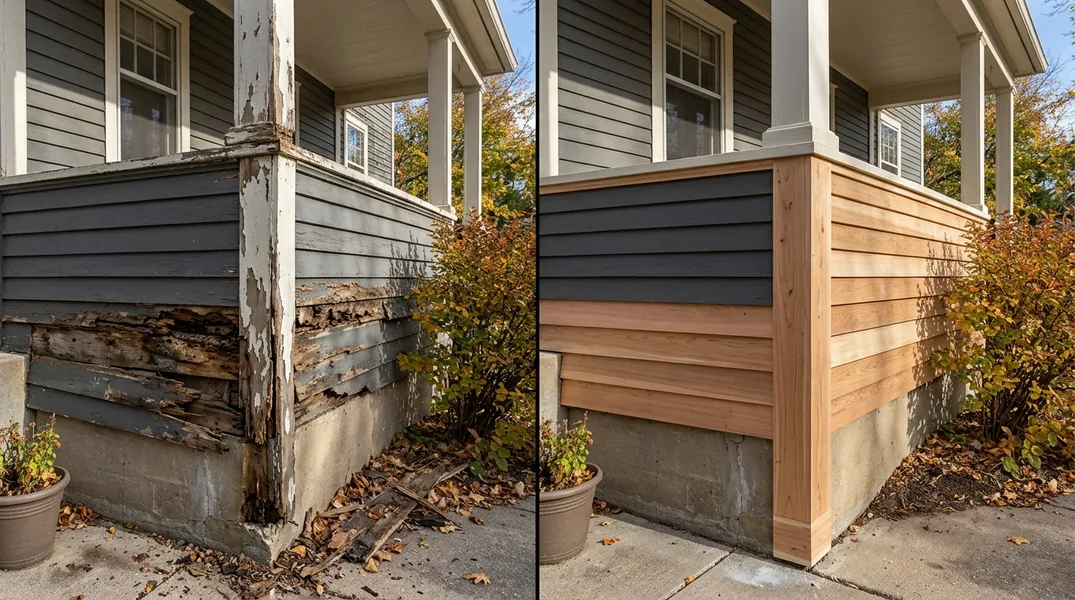
The reason Wood Rot & Dry Rot Repair is critical for Queen Anne and Craftsman homes is that these structures rely on solid wood framing to distribute loads evenly. When rot compromises a floor joist, beam, or wall stud, the entire structural system is thrown out of balance. What might look like a small soft spot in a windowsill or corner board can be the visible tip of decay that extends deep into the frame. Ignoring early signs means risking foundation settlement, floor sag, and eventually, structural failure.
Wood Siding Repair: The First Line of Defense
Your home's exterior wood siding is the primary barrier between the interior frame and the elements. Queen Anne and Craftsman homes typically feature either horizontal lap siding, shingles, or decorative board-and-batten patterns. These materials are beautiful and authentic, but they require regular inspection and maintenance to prevent water intrusion. Cracked, missing, or improperly sealed siding allows moisture to penetrate behind the surface, where it can sit against the framing lumber for months or years without your knowledge.
Wood siding repair isn't always about replacing entire sections. Often, the best approach is targeted intervention: recaulking joints, replacing individual damaged boards, and ensuring that flashing around windows, doors, and roof penetrations is sound. Regular painting or staining also protects wood from UV damage and water absorption. Many homeowners in Madison find that investing in siding maintenance every five to seven years prevents the need for major structural repairs later. If you notice soft spots, paint bubbling, or visible gaps in your siding, a professional inspection can determine whether the damage is cosmetic or whether rot has already begun.
Historic Home Maintenance Madison: Seasonal Priorities and Prevention
Preventive maintenance is the most cost-effective strategy for historic homes. Spring and fall are critical windows for inspection and repair in Madison. In spring, check gutters and downspouts to ensure water is flowing away from the foundation and not pooling against the house. Inspect the roof for missing or damaged shingles that could allow leaks into attic spaces. Look for signs of animal entry, which can compromise insulation and create moisture problems. Examine exterior wood for new cracks or soft spots. In fall, clear gutters again, check that basement and crawl space drainage is working, and seal any gaps or cracks that could allow cold air infiltration.
Inside, pay attention to basements and crawl spaces. These areas are prone to dampness, and many historic homes lack proper vapor barriers or sump pump systems. If you notice musty smells, visible mold, or standing water, address it immediately. Adequate ventilation, dehumidification, and proper grading around the foundation can prevent most moisture-related problems. Don't ignore small signs like water stains on joists or foundation walls; these indicate that moisture is present and wood decay is likely developing. The cost of addressing moisture early is a fraction of the cost of Floor Joist & Subfloor Repair or structural restoration.
When to Call a Professional: Craftsman Bungalow Repair Near Me
Not every wood maintenance task requires professional help, but certain situations absolutely do. If you notice sagging floors, doors that won't close properly, or visible structural movement, these are signs that rot or structural damage has progressed significantly. If you find soft wood when you probe with a screwdriver or knife, decay is active and spreading. If you see evidence of Termite Damage Repair, don't delay; termites can cause damage as severe as wood rot and spread rapidly through a structure. If your home has water intrusion from a roof leak, burst pipe, or foundation crack, professional assessment is essential to determine whether hidden decay has already begun.
Madison Carpentry specializes in the unique challenges of Queen Anne and Craftsman homes. Our team understands the historical construction methods, original materials, and structural systems that make these homes different from modern construction. We can identify decay before it becomes catastrophic, recommend repairs that preserve the home's character and value, and execute work that meets the standards these homes deserve. If you're concerned about wood condition or structural integrity, don't guess. Call us at (608) 471-7359 for a professional evaluation, or visit our website to request a free estimate. Early intervention saves money and preserves the home you love.
Wood Rot & Dry Rot Repair Cost in Madison: What to Budget
The cost of wood rot repair varies enormously depending on the extent of decay, the location of the damage, and the complexity of the repair. A small area of surface rot on exterior trim might cost a few hundred dollars to address. Decay that has penetrated into structural framing, floor joists, or beams can cost thousands. Beam Replacement & Load-Bearing Wall Removal projects can exceed $10,000 or more, depending on the scope and whether temporary structural support is needed during the repair. The good news is that preventive maintenance is far less expensive than major structural repair. A professional inspection costs relatively little and can identify problems while they're still manageable.
When evaluating pricing for wood repair, remember that the cheapest estimate isn't always the best value. A contractor who underestimates the scope of decay or recommends inadequate repairs will leave you with recurring problems. Madison Carpentry provides transparent estimates that explain what we're doing, why it's necessary, and what you can expect for your investment. We're happy to discuss your budget and work with you to prioritize repairs based on structural urgency and your financial capacity. Contact us at (608) 471-7359 or request a free estimate to get a clear picture of what your home needs.
Looking for a professional carpentry contractor in Madison? Madison Carpentry responds fast for all your carpentry needs.
Get a Free QuoteOur services: Wood Rot & Dry Rot Repair · Termite Damage Repair · Floor Joist & Subfloor Repair