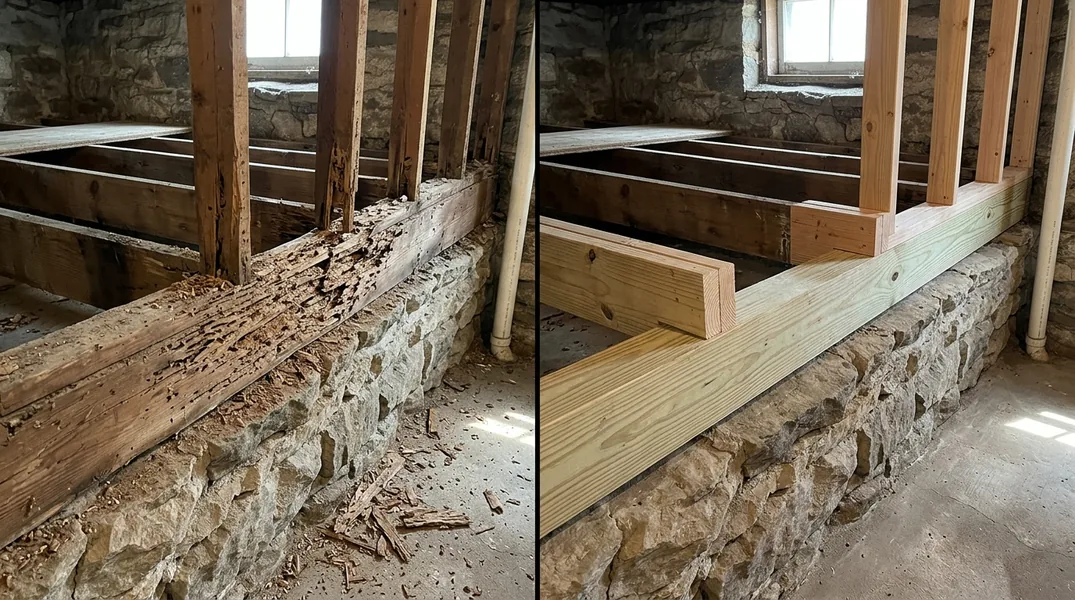
Understanding Dry Rot vs Carpenter Ant Damage
One of the most common questions homeowners in Madison ask is whether their wood damage comes from dry rot or carpenter ants. The confusion is understandable, because both can cause serious structural problems and both require professional attention. However, the cause, appearance, and treatment approach differ significantly. Knowing the difference helps you act quickly and choose the right repair strategy for your home.
Dry rot is a fungal decay that thrives in moist wood, gradually breaking down the cellular structure and leaving wood brittle and crumbly. Carpenter ants, by contrast, are insects that tunnel through wood to create galleries for nesting, but they don't actually eat the wood like termites do. Both can weaken your home's structural integrity, but the damage patterns, treatment methods, and urgency levels are distinct. Understanding these differences is the first step toward protecting your investment and your family's safety.
What Does Wood Rot Look Like? Visual Signs of Dry Rot
Dry rot has a distinctive appearance that can help you identify it quickly. The affected wood typically becomes soft, spongy, and darkens in color, often turning a deep brown or tan shade. As the fungus progresses, the wood may develop deep cracks running both with and across the grain, creating a cube-like pattern. This cracking pattern is one of the most telltale signs of advanced dry rot. The wood may also feel lightweight and crumble easily when you press on it, almost like it's turning to powder or sawdust in your hands.
You might also notice a musty, earthy smell around affected areas, which is the fungal growth itself. In some cases, you'll see white or grayish fungal strands (mycelium) on the wood surface or nearby materials. The damage often starts in areas with poor ventilation or moisture problems, such as crawl spaces, basements, or around plumbing penetrations. If you suspect dry rot in your Madison home, it's critical to get a professional inspection. The longer dry rot spreads, the more expensive the repairs become.
Carpenter Ant Damage in Wood: What to Look For
Carpenter ant damage presents very differently from dry rot. When carpenter ants tunnel through wood, they create smooth, clean galleries and tunnels. The wood around these galleries remains relatively sound and doesn't crumble like rotted wood does. One of the most obvious signs of carpenter ant activity is the presence of coarse sawdust or frass (ant droppings) near entry points or below damaged areas. This material is often found in small piles and may contain bits of wood and dead insects.
Unlike dry rot, carpenter ant damage doesn't soften the wood; instead, it hollows it out while leaving the outer surface relatively intact. You might see small, perfectly round exit holes about the size of a pencil eraser on the wood surface. Carpenter ants are also active at night, so you may hear rustling or tapping sounds inside walls, especially during quiet hours. If you spot carpenter ants themselves, they're large (about half an inch long) and typically black or reddish-black in color. Finding live carpenter ants in your home is a sign that an active infestation is ongoing and requires immediate professional intervention.
Key Differences: Dry Rot vs Carpenter Ant Damage
The most obvious difference between dry rot and carpenter ant damage lies in the wood's condition. Dry rot makes wood soft, crumbly, and dark. Carpenter ant damage leaves wood structurally sound but hollowed out with clean tunnels. Dry rot requires moisture to thrive and spreads through fungal growth, while carpenter ants are active insects that can infest wood regardless of moisture level (though they prefer some dampness).
The smell and debris are also telling. Dry rot produces a musty, fungal odor and may show visible fungal growth. Carpenter ants leave behind coarse sawdust piles and may produce audible sounds. Dry rot spreads continuously as long as moisture is present, while carpenter ant damage is localized to where the ants are nesting. Perhaps most importantly, dry rot requires moisture control and fungicide treatment, while carpenter ant infestations require targeted pest control followed by repairs. Misidentifying the problem can lead to ineffective treatment and continued damage. When in doubt, contact a professional for a proper diagnosis.
When to Call a Professional for Wood Rot & Dry Rot Repair Near Me
If you've identified either dry rot or carpenter ant damage in your home, don't delay in calling a professional. Wood Rot & Dry Rot Repair is not a DIY project for most homeowners. The damage is often more extensive than what's visible on the surface, and improper treatment can allow the problem to spread further. A professional inspection will reveal the full scope of the damage and determine whether structural components like floor joists, beams, or load-bearing walls have been compromised.
Madison Carpentry specializes in identifying and repairing both dry rot and carpenter ant damage. Our team will assess the damage, determine the underlying cause (usually moisture for dry rot), and recommend the appropriate repair strategy. In some cases, this might involve Floor Joist & Subfloor Repair or even Beam Replacement & Load-Bearing Wall Removal if structural integrity is at risk. Early intervention can save you thousands of dollars and prevent safety hazards. If you suspect wood damage in your home, reach out to us at (608) 471-7359 for a free estimate.
Prevention and Long-Term Protection
The best way to avoid costly repairs is to prevent wood rot and carpenter ant damage from starting in the first place. For dry rot, moisture control is essential. Ensure that gutters and downspouts direct water away from your foundation, fix any plumbing leaks promptly, and maintain proper ventilation in crawl spaces and attics. Keep wood-to-soil contact to a minimum, as this is where dry rot often begins. Regular inspections of vulnerable areas, especially basements and crawl spaces, can catch early signs of fungal growth before it spreads.
For carpenter ant prevention, eliminate standing water and fix any moisture problems around your home. Trim tree branches that hang over your roof, as carpenter ants can use these as highways to reach your house. Seal cracks and gaps in your foundation, siding, and around windows and doors. Store firewood away from your home and keep your yard clear of dead wood and debris. If you notice any of the warning signs we've discussed, address them immediately rather than hoping the problem will go away on its own. Prevention is always more cost-effective than dealing with advanced structural damage.
Looking for a professional carpentry contractor in Madison? Madison Carpentry responds fast for all your carpentry needs.
Get a Free QuoteOur services: Wood Rot & Dry Rot Repair · Termite Damage Repair · Floor Joist & Subfloor Repair